650-Foot Mega Tsunami Explained: Cause, Satellite Tracking & Future Risk
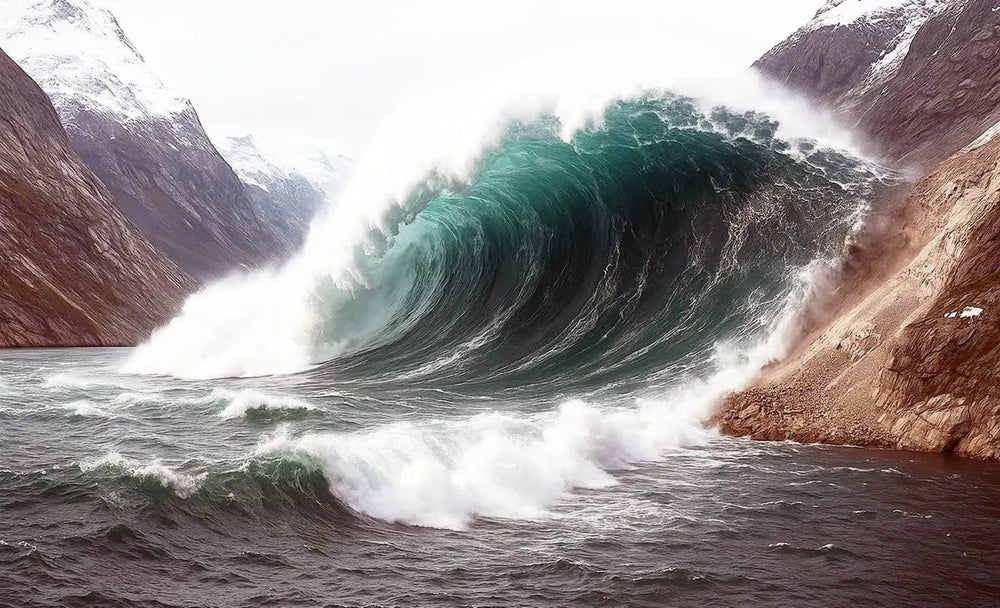
🌊 650-Foot Mega Tsunami: What It Means & Should You Be Worried?
Published on: June 8, 2025
🧠 What’s This All About?
A massive 650-foot mega tsunami occurred in Greenland’s Dickson Fjord in 2023. While it sounds scary, this event has already happened. Scientists are now studying it to better understand how such tsunamis form and whether they pose a future threat.
📍 What Caused the Tsunami?
The tsunami was caused by a huge landslide — about 2 million cubic meters of rock — that fell into the fjord. This caused massive waves, as high as 650 feet. It wasn’t due to an earthquake but rather melting glaciers weakening mountain slopes.
📡 How Did Scientists Know?
Thanks to NASA’s SWOT satellite, scientists noticed unusual waves moving across oceans. Seismic sensors also picked up vibrations. It marked the first time a large tsunami was tracked in near real-time via satellites.
🌍 Is Another Tsunami Coming?
No, not immediately. This event has already occurred. Scientists are using it as a case study to better monitor and predict future tsunamis, especially in glacier-heavy regions.
🌐 Which Regions Could Be at Risk?
- Greenland & Arctic regions
- Alaska
- Norway’s fjords
- Himalayas and Andes (glacial areas)
It is unlikely that such a tsunami would affect places like India or mainland USA unless similar geological events occur nearby.
🧊 What This Means for Everyone
This event shows that climate change can cause indirect natural disasters. Melting glaciers weaken mountains, increasing the risk of landslides and tsunamis in certain areas.
🛰️ Why This Research Matters
- Improves tsunami warning systems
- Enhances understanding of glacial impact
- Proves satellite-based disaster monitoring works
🧠 Final Thoughts
This 650-foot tsunami was real — and a wake-up call. It helps scientists prepare for future risks, even if most of the world is not directly in danger today. It’s a reminder of nature’s power and the need for preparedness.