🔍 What is Edge Computing?
April 05, 2026 · By PC Bazaar
🔍 What is Edge Computing
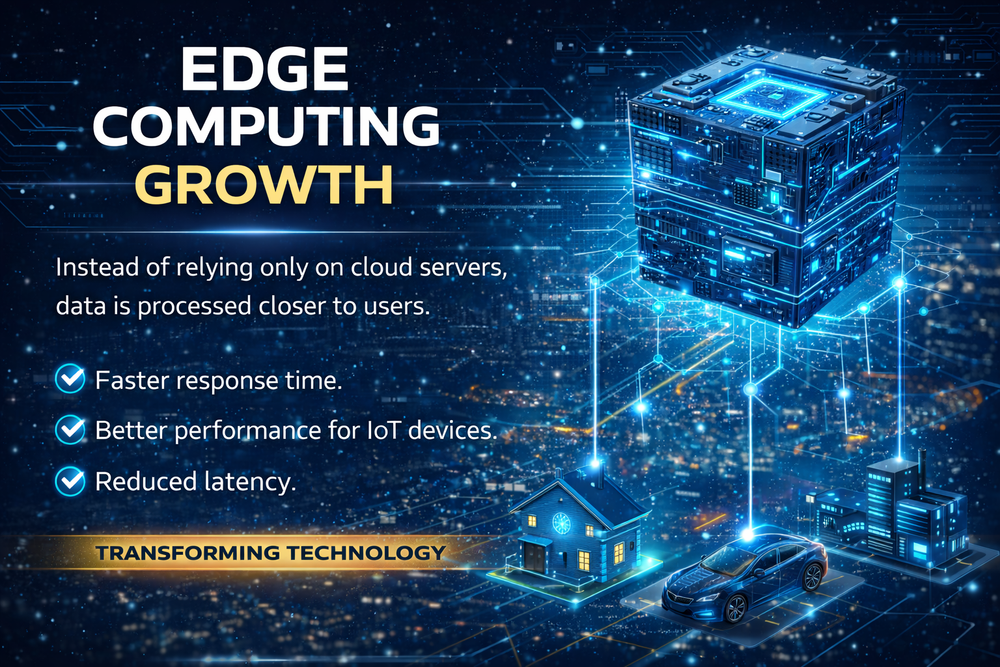
Edge computing is a technology where data is processed near the source (devices or local servers) instead of sending everything to distant cloud data centers.
👉 This results in:
- Faster performance
- Real-time processing
- Improved efficiency
⚡ Key Benefits of Edge Computing
⏱️ 1. Faster Response Time
- Data is processed locally
- No delay from sending data to cloud
- Ideal for real-time applications
📡 2. Better Performance for IoT Devices
- Smart devices work more efficiently
- Reduced network congestion
- Stable connectivity
🔻 3. Reduced Latency
- Minimal delay in communication
- Critical for:
- Online gaming
- Smart cities
- Autonomous systems
🌐 Real-World Applications
- Smart homes & security systems
- Industrial automation
- Healthcare monitoring devices
- Connected vehicles
📈 Why Edge Computing is Growing Fast
- Rise of IoT devices
- Need for real-time data processing
- Increasing demand for faster user experience
💡 Edge vs Cloud Computing
| Feature | Edge Computing | Cloud Computing |
|---|---|---|
| Speed | Very Fast | Moderate |
| Latency | Low | Higher |
| Processing | Local | Centralized |
| Use Case | Real-time apps | Data storage |
🎯 Final Thoughts
Edge computing is transforming how data is processed in 2026. By bringing computing closer to users, it ensures faster, smarter, and more efficient systems.